
COMBO-JET® DUAL-ANGLE MAX SPRAY NOZZLES
Dual Direction. Maximum Coverage.
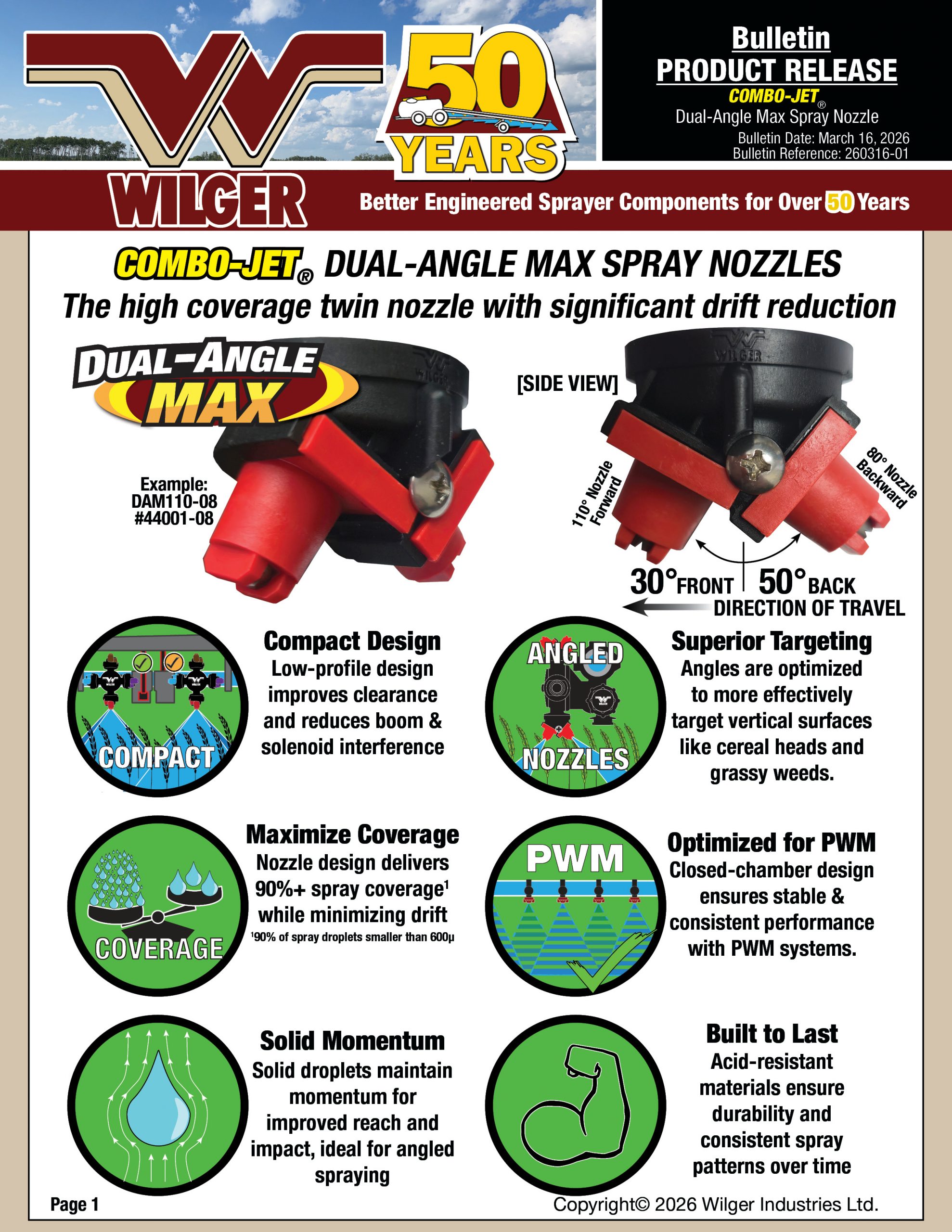
Wilger is proud, in our 50th anniversary year, to introduce the new COMBO-JET® Dual-Angle Max (DAM) nozzle series.
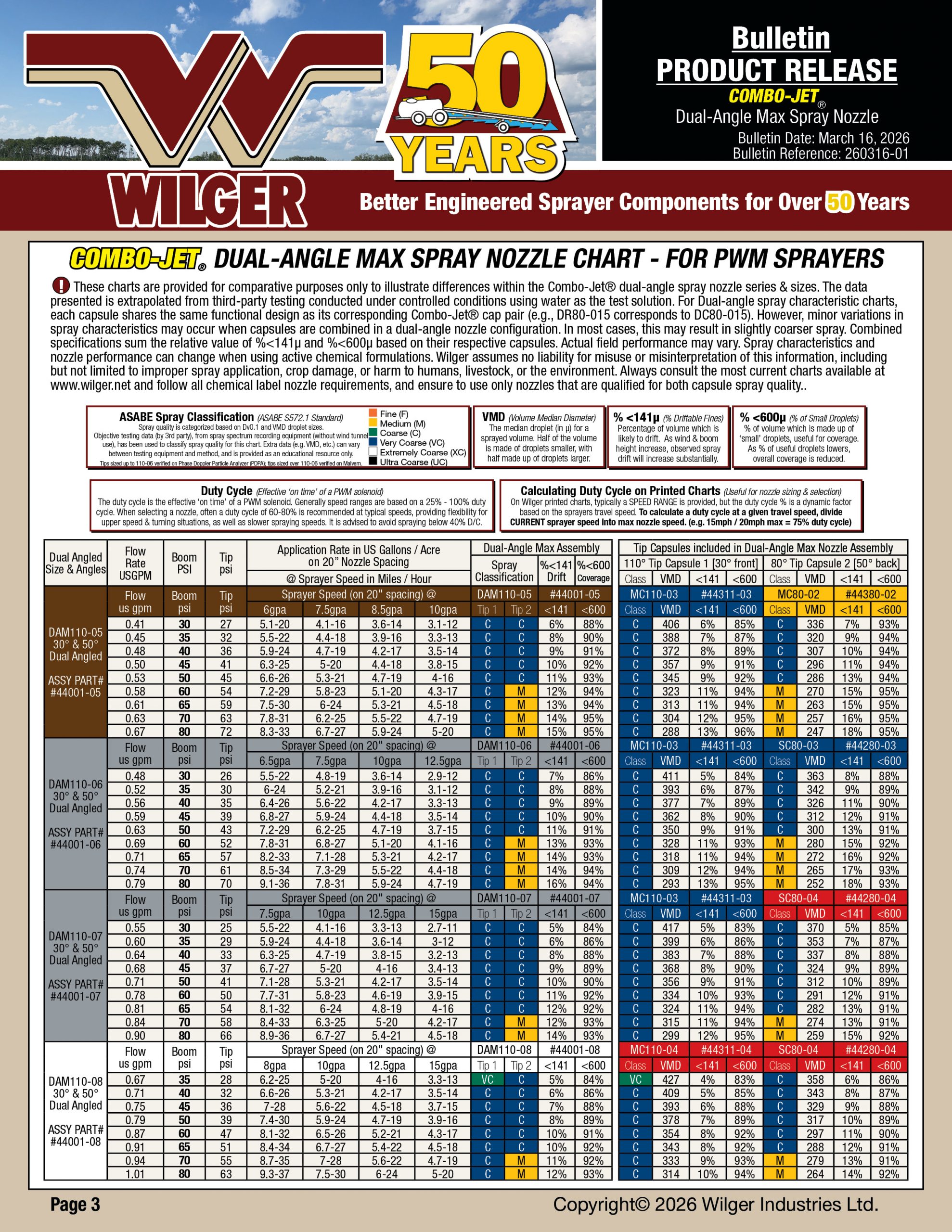
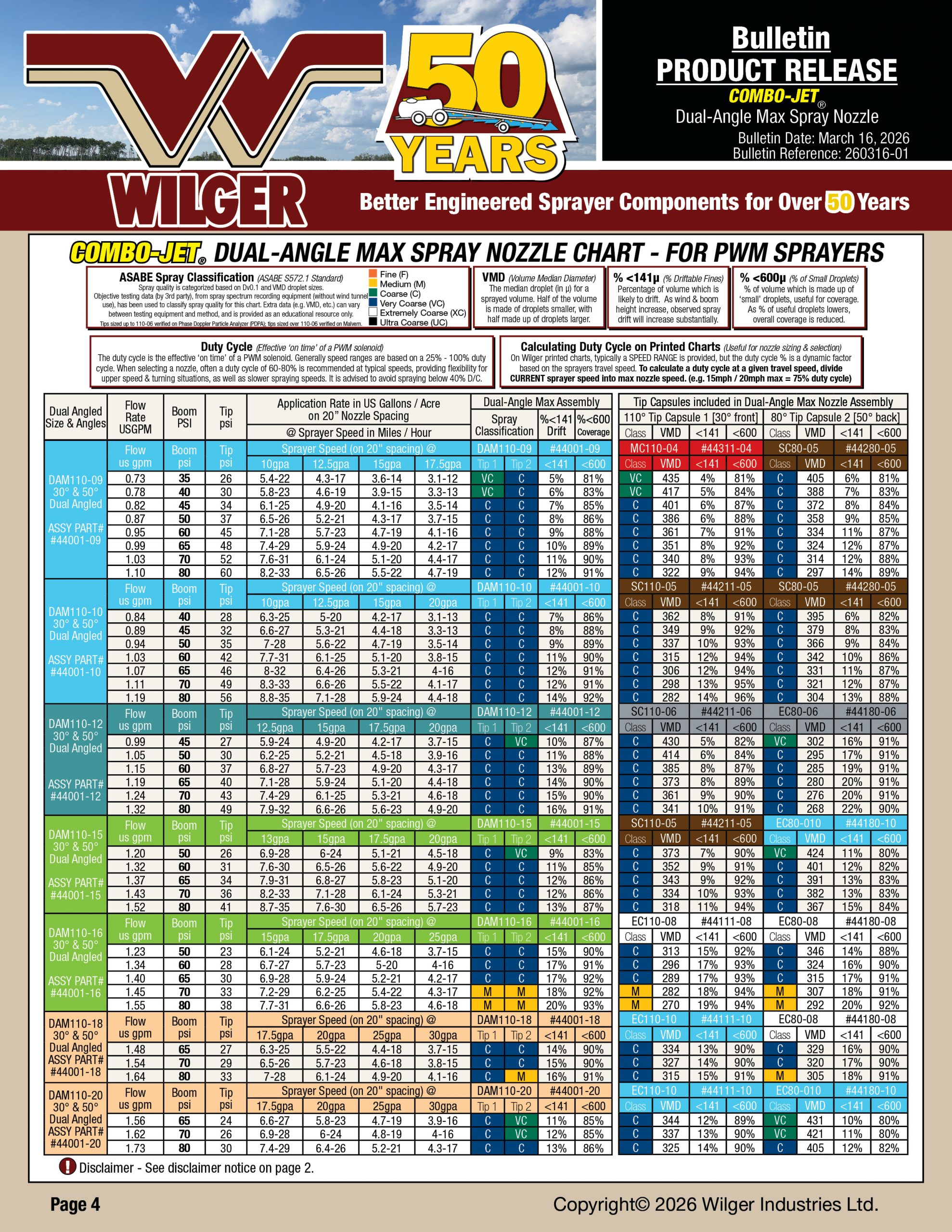
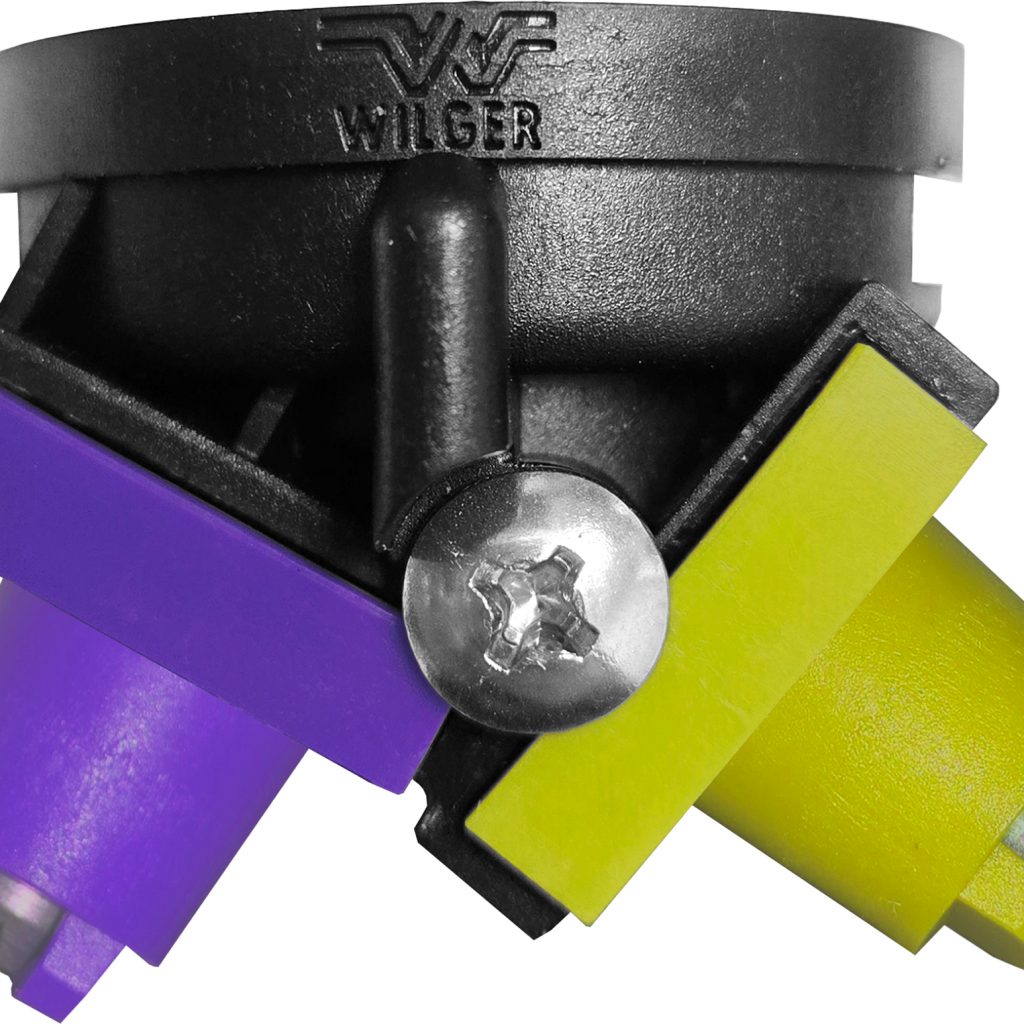
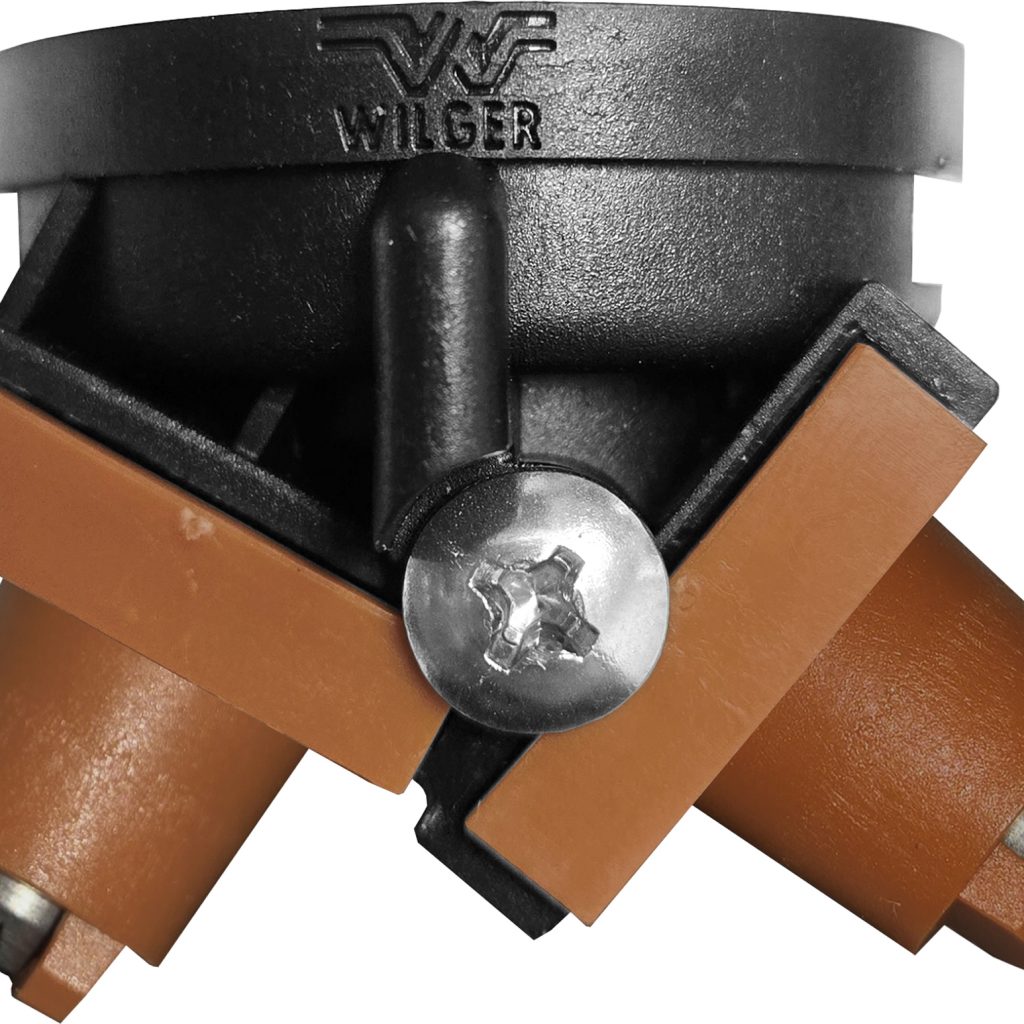
Designed to improve spray deposition on vertical and complex crop targets, the Dual-Angle Max series produces a catered medium-coarse spray quality while maintaining two opposing spray angles: 30° forward & 50° backward.
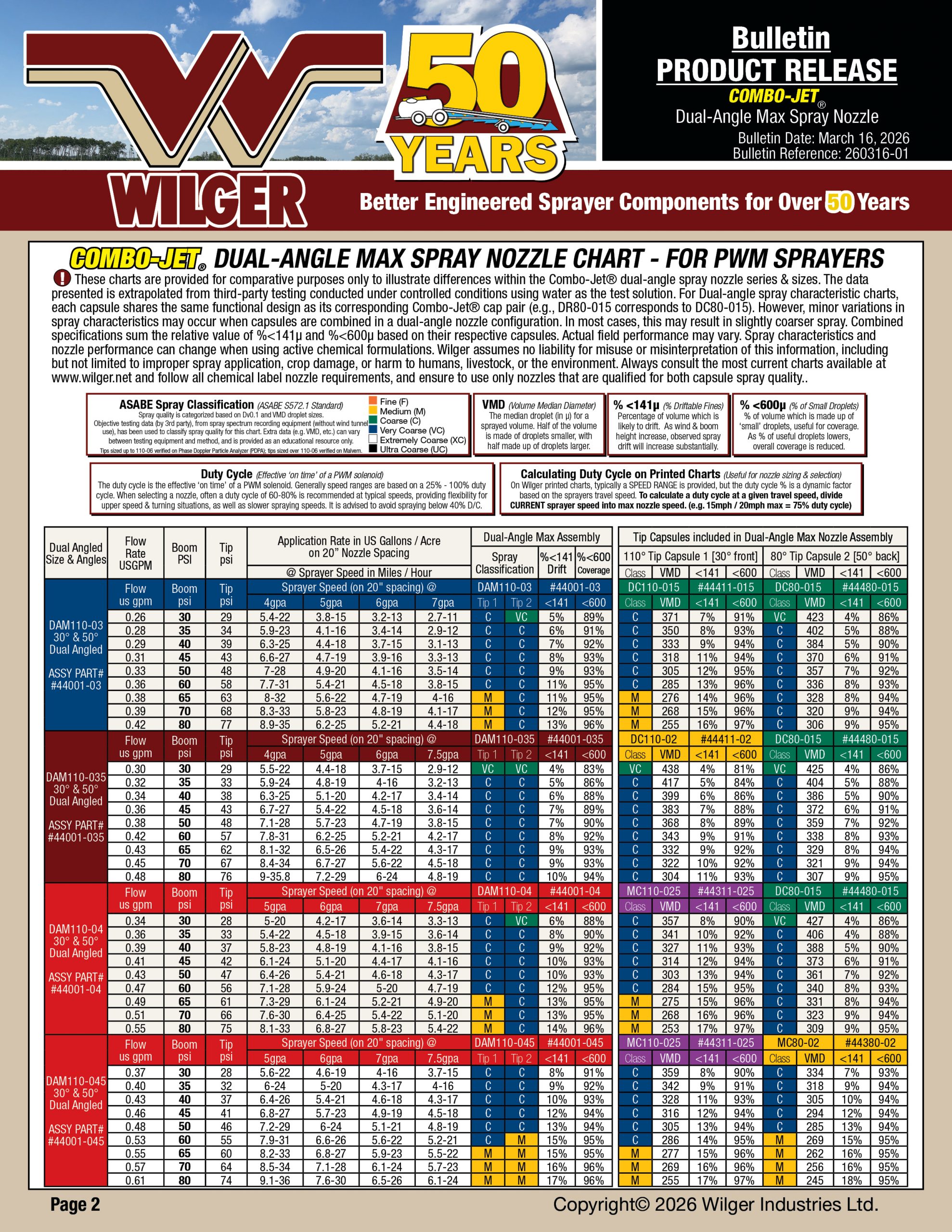
If you are familiar with Wilger nozzle charts, the DAM110 series is design to maintain coverage factor (%<600µ) of 90% or higher, even for high rate applications like fungicides.
This dual-direction spray pattern increases the effective spray volume reaching vertical growing targets, making it ideal for applications such as:
- Cereal Headblight application (e.g. fusarium headblight)
- Small, grassy weed control
- Dense crop canopies (keep your boom low)
- Targeted desiccation applications where top-canopy coverage is critical
- High volume applications where a single nozzle becomes too large and coarse to be effective.
By attacking the target from two directions, the DAM110 series improves coverage in complicated real-life situations where single nozzles spraying straight down can miss.
Built on proven COMBO-JET Performance
The Dual-Angle Max series delivers an excellent balance of spray quality thanks to its ability to use COMBO-JET slide-in capsules to create the perfect sweet spot for coverage while minimizing drift significantly. If you find you are suffering from a lack of coverage, look at the Dual-Angle Max.
This means applicators benefit from the same trusted spray performance they’ve come to rely on with other COMBO-JET nozzles, while gaining the added advantage of dual-angle coverage, and much more compact form factor of the new dual-cap design.
COMPACT Dual-Angle Nozzle for the Modern Sprayer Boom
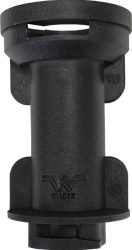
Noticing your sprayer boom seems to have more things going on and less room for spraying equipment? The Dual-Angle max series is a compact dual cap. It takes up a great deal less space than any angled nozzle adapters, freeing up much needed space around your nozzle body.
Specifically with our Dual-Spray 4+1 (DS41) nozzle bodies, it significantly reduces boom and solenoid interference. (NOTE: there is some interference with larger solenoids mounted on “LEFT” DS41 nozzle bodies due to the fixed dimensions of the solenoid, but the ability to rotate the turret is greatly improved even in those situations).
Fully Customizable Spray Configuration
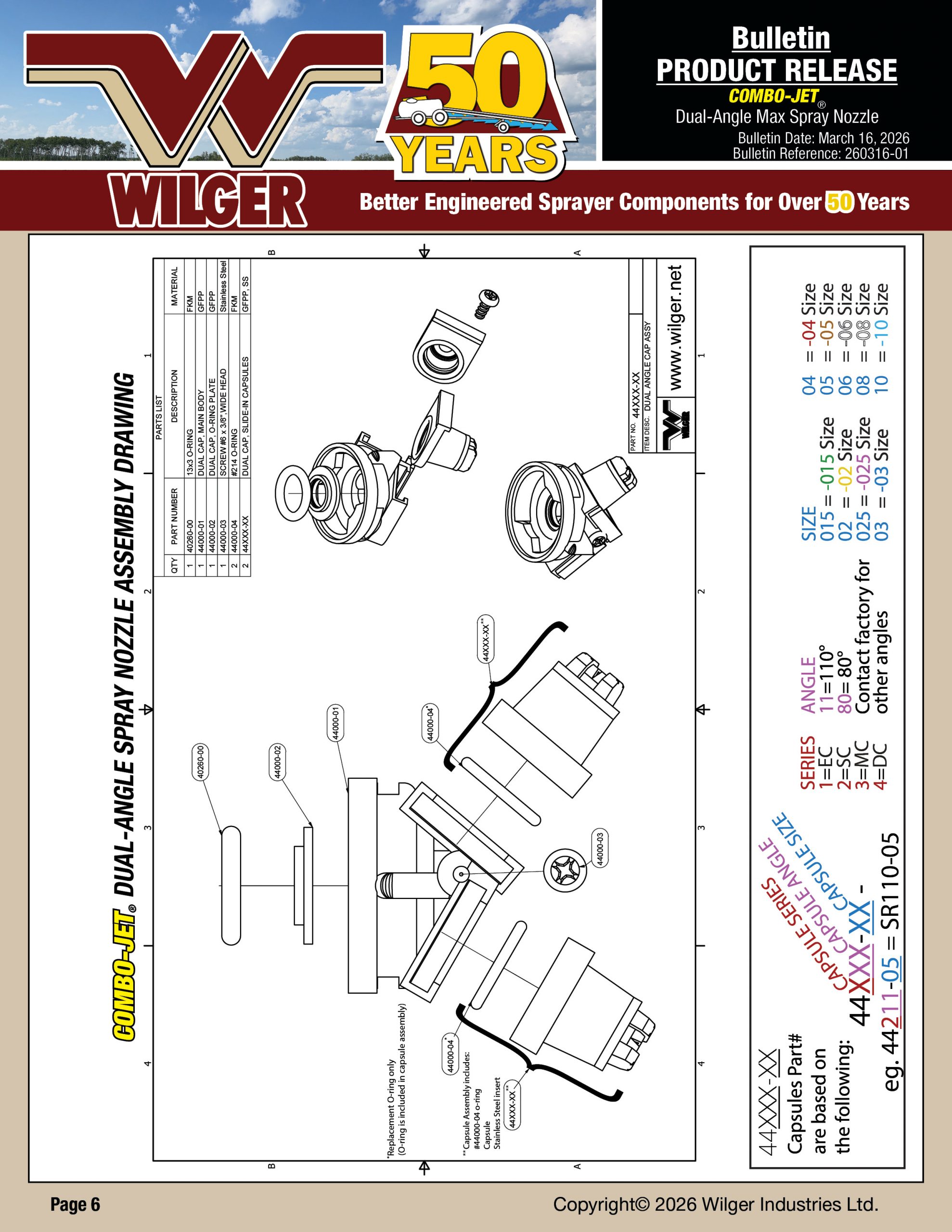
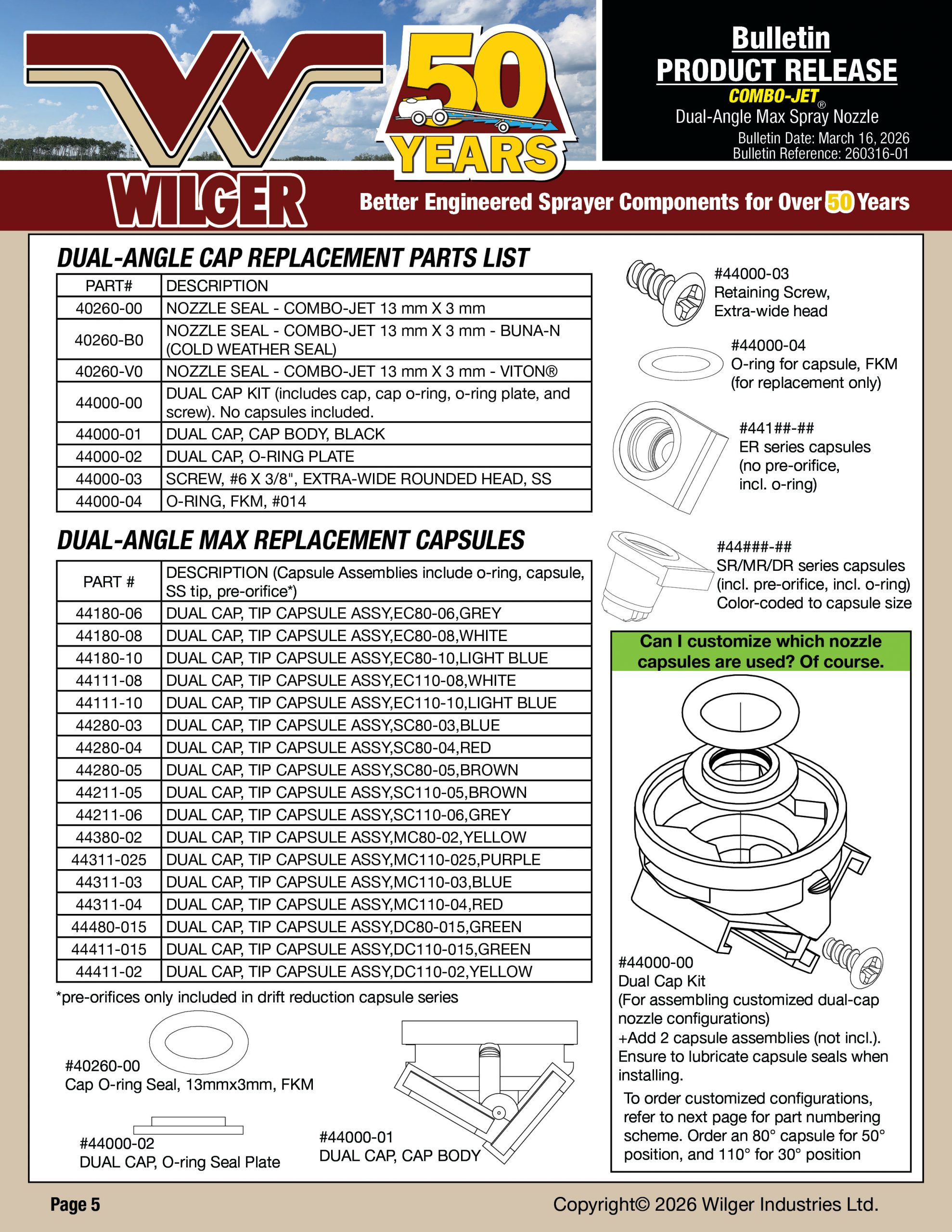
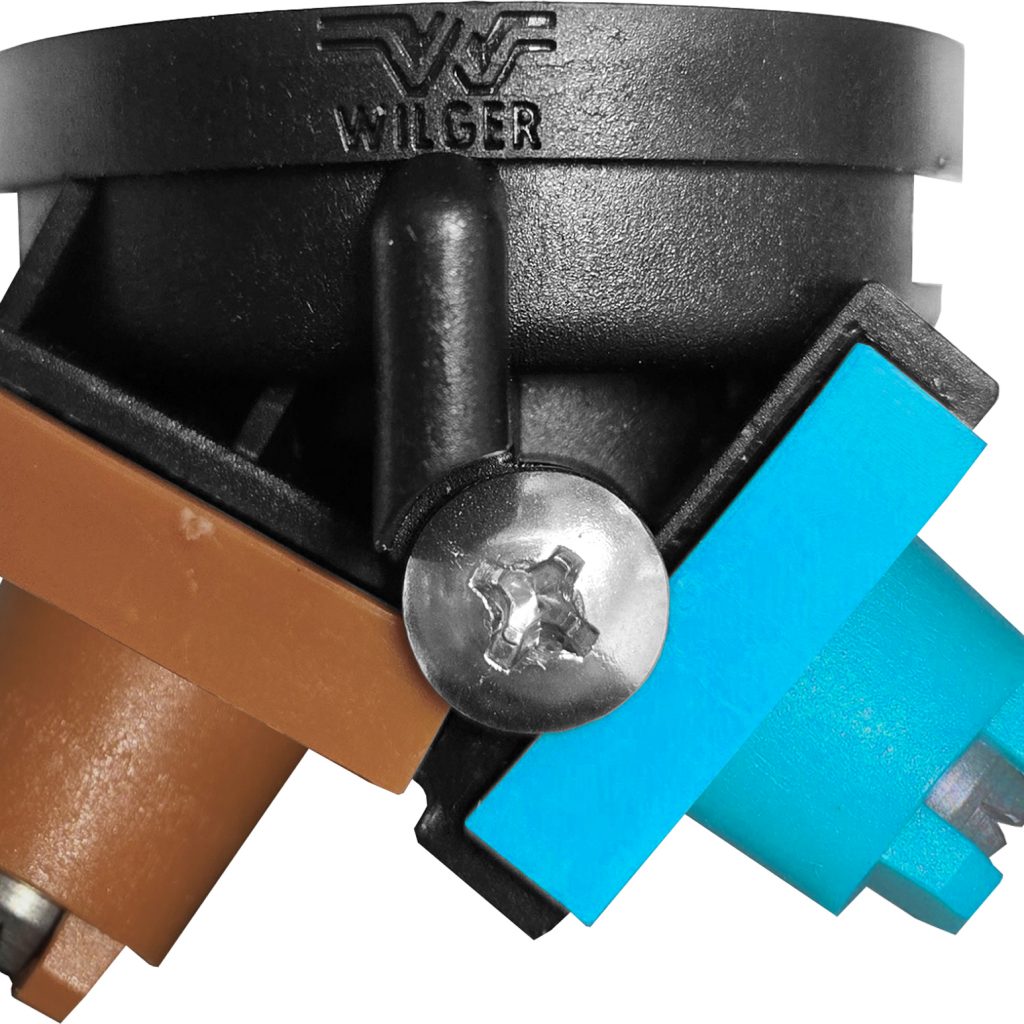
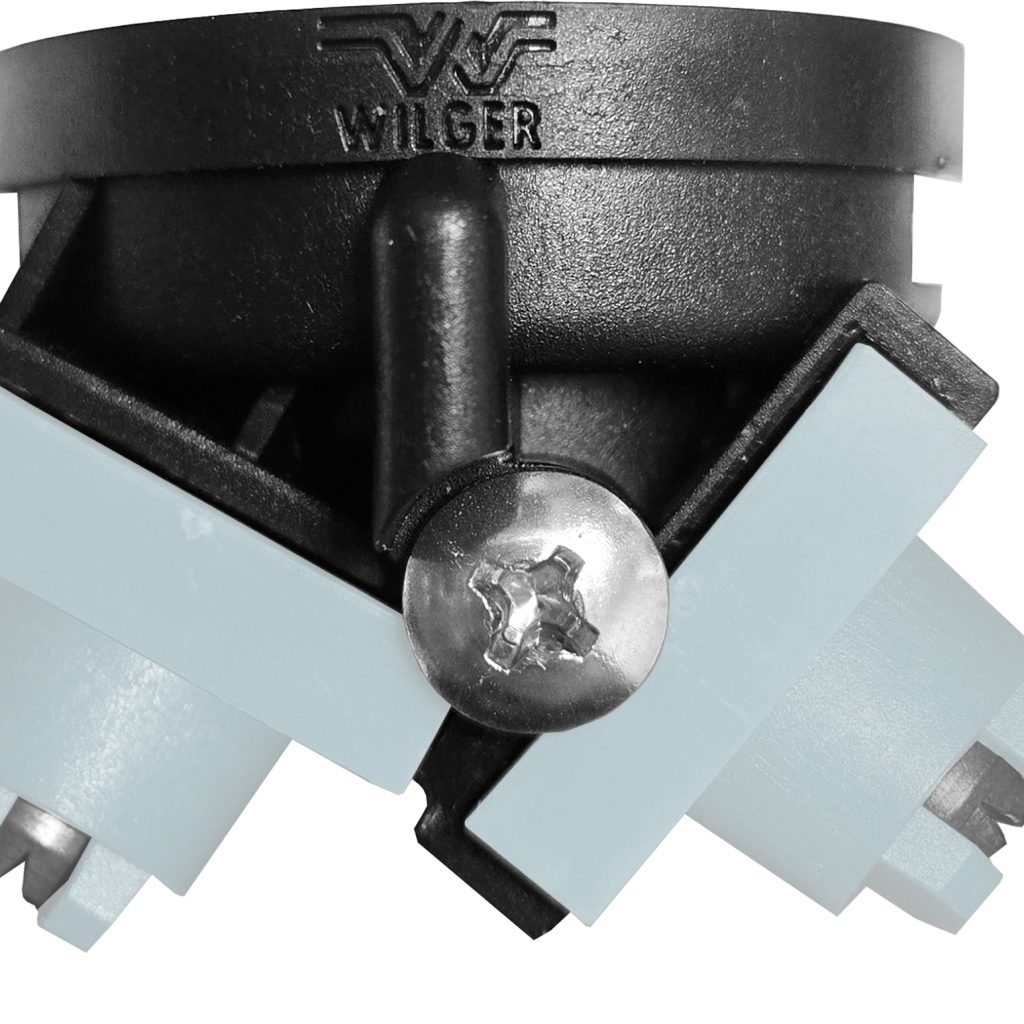
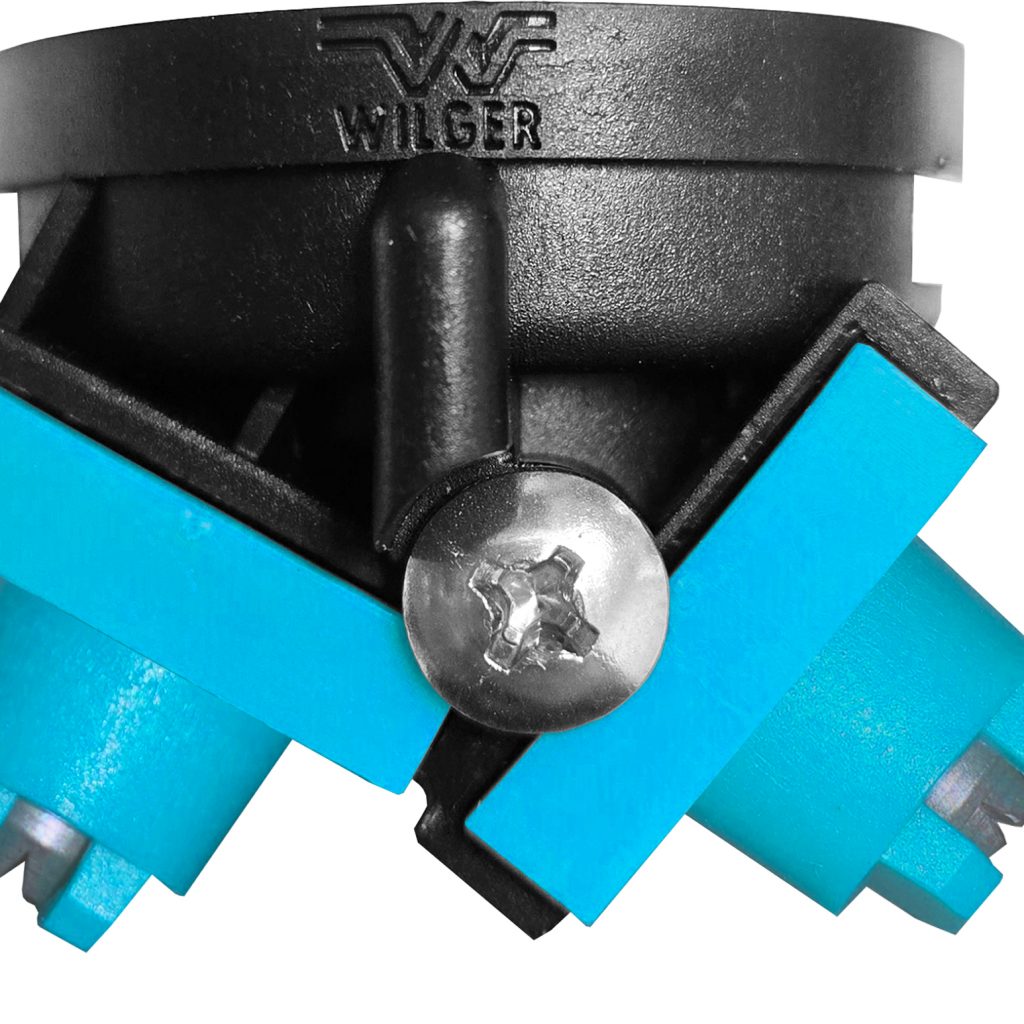
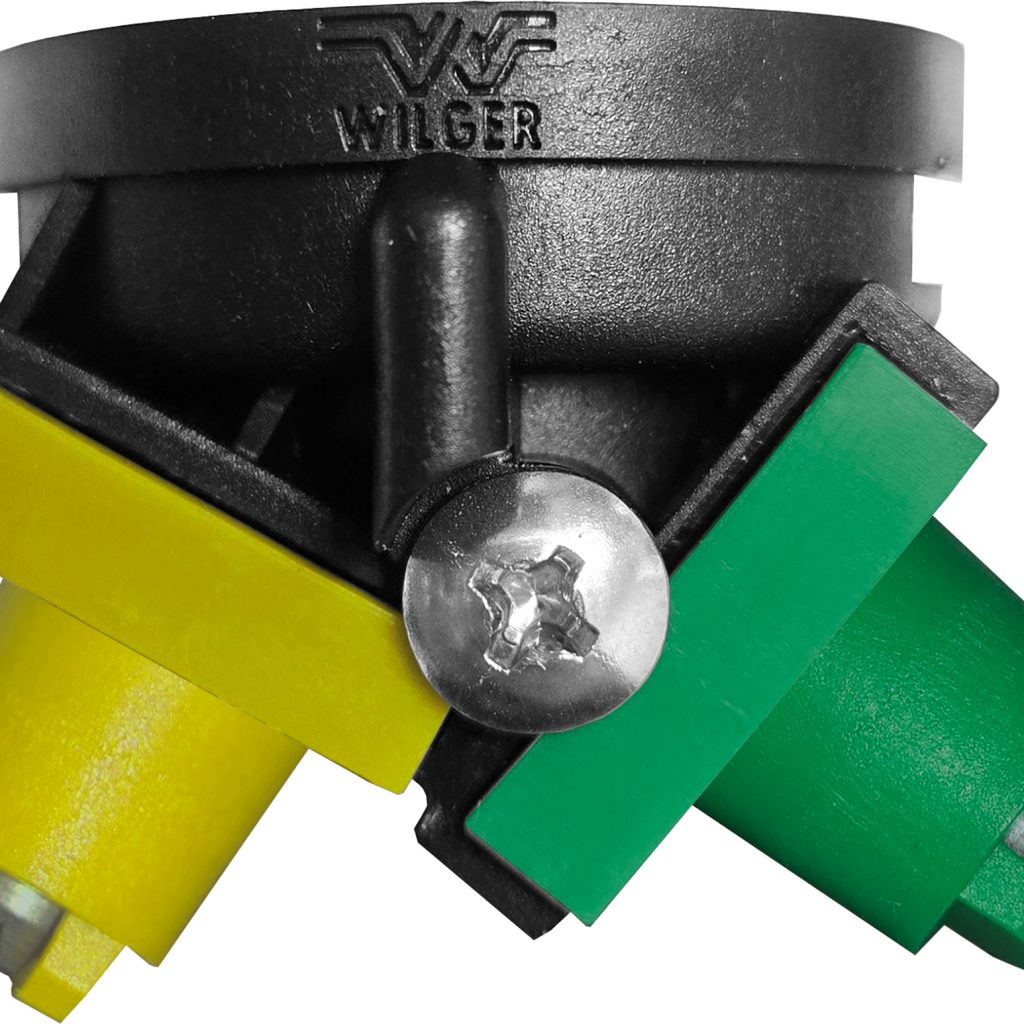
One of Wilger’s key goals is to empower spray applicators to improve how they spray. Often this meant using adapters made by Wilger to change HOW we spray (e.g. using double-down adapters, or angled adapters). With that core vision in mind, we also ensure spray applicators can customize their Dual-Angle MAX spray nozzles as well. The dual-cap can be dissassembled and the capsules swapped with other series (using the same COMBO-JET series and sizes in dual-cap capsule form), or a user can buy the #44000-00 dual-cap kit as well as the two nozzle capsules (based on normal ER/SR/MR/DR and 80°/110° and size format).
Refer to the bulletin for the part number scheme for customizing nozzle capsule.
Being able to customize a dual-cap nozzle provides limitless ability to change HOW we spray, with a much more compact package. We can customize nozzle sizes for even tighter nozzle selection, change spray qualities forward or backward to address real life conditions and more.
You can design your own nozzle that could perform better in your real life conditions, one better than any you have ever seen.
Spray Better with Dual-Angled Coverage
The COMBO-JET Dual-Angle MAX (DAM series) represents Wilger’s continued commitment to helping farmers and applicators spray smarter, achieve better coverage, and maximize every pass across the field.
Learn more about the Dual-Angle MAX series on the website or talk to your Wilger dealer today.
What happens if I am spraying my boom frame?
Each sprayer is designed and set differently, often with sprayer boom tube mounting within the frame being adjusted to the nozzle style being used. In the event that your sprayer tubing is pre-set high into the sprayer frame and would have the dual-angle max nozzles to be spraying the physical structure of the boom, there are a few alternatives.
- Especially when the interference of the structure occurs in a handful of positions due to brackets, mounting, or structures in the sprayer boom, using Wilger’s 2″ nozzle drop adapter is a convenient way to move beyond the interference. Wilger’s adapter is #40210-00, and drops the nozzle ~2.25″ from the typical nozzle position.
- If the installation of the Dual Angle Max nozzle in one orientation (e.g 30° angled forward, and 50° angled backward) has the 50° angled nozzle spraying the boom frame, BUT if reversed, there is no spray interference, that would be the suggestion if the nozzle drop adapter is not an option. With this, the spray deposition does change somewhat, but it still still provide beneficial application by design.
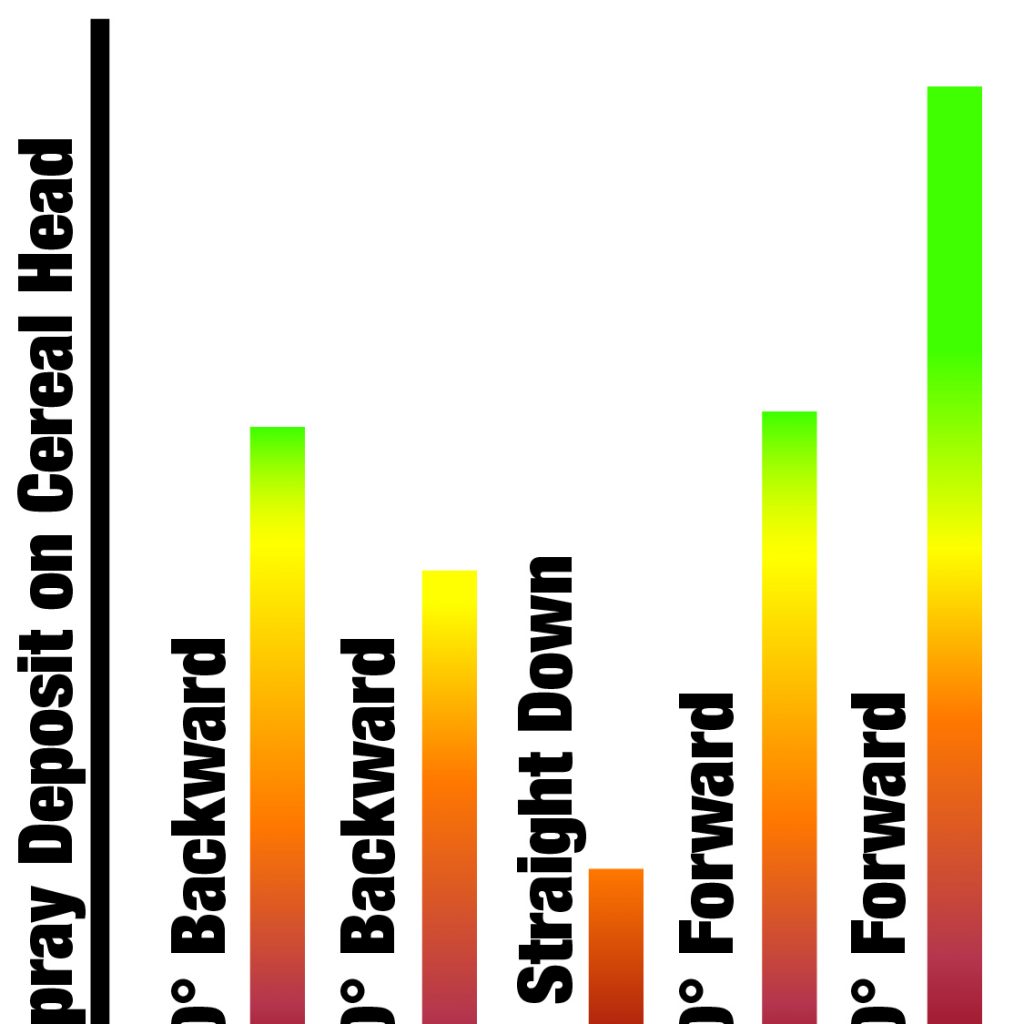
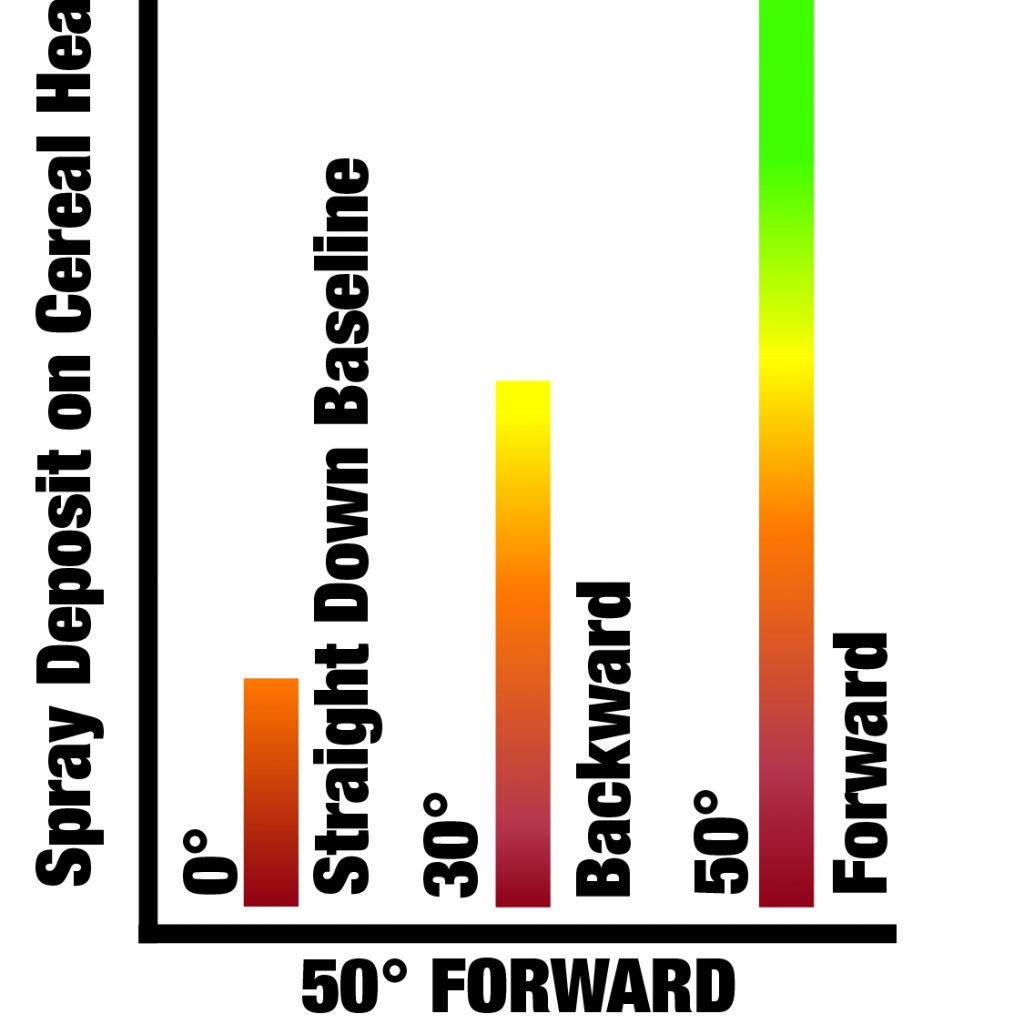
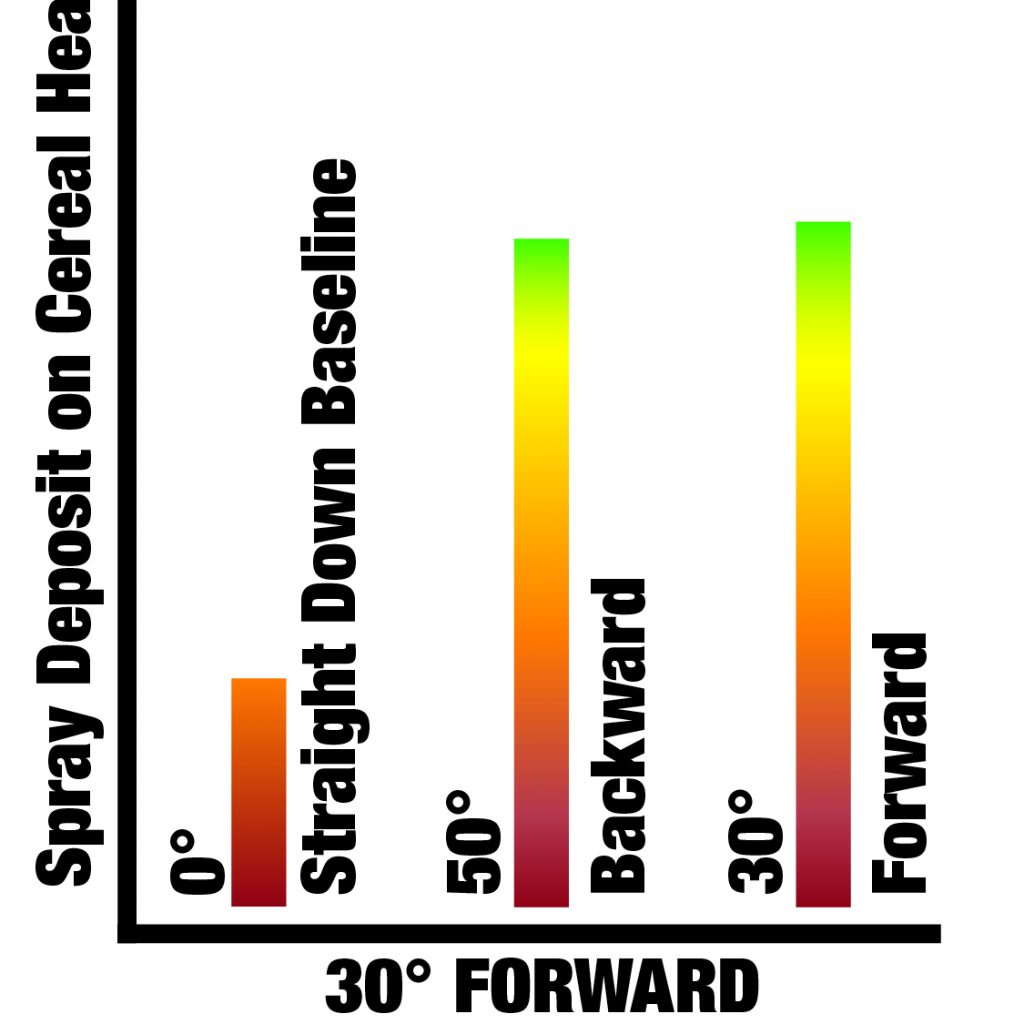
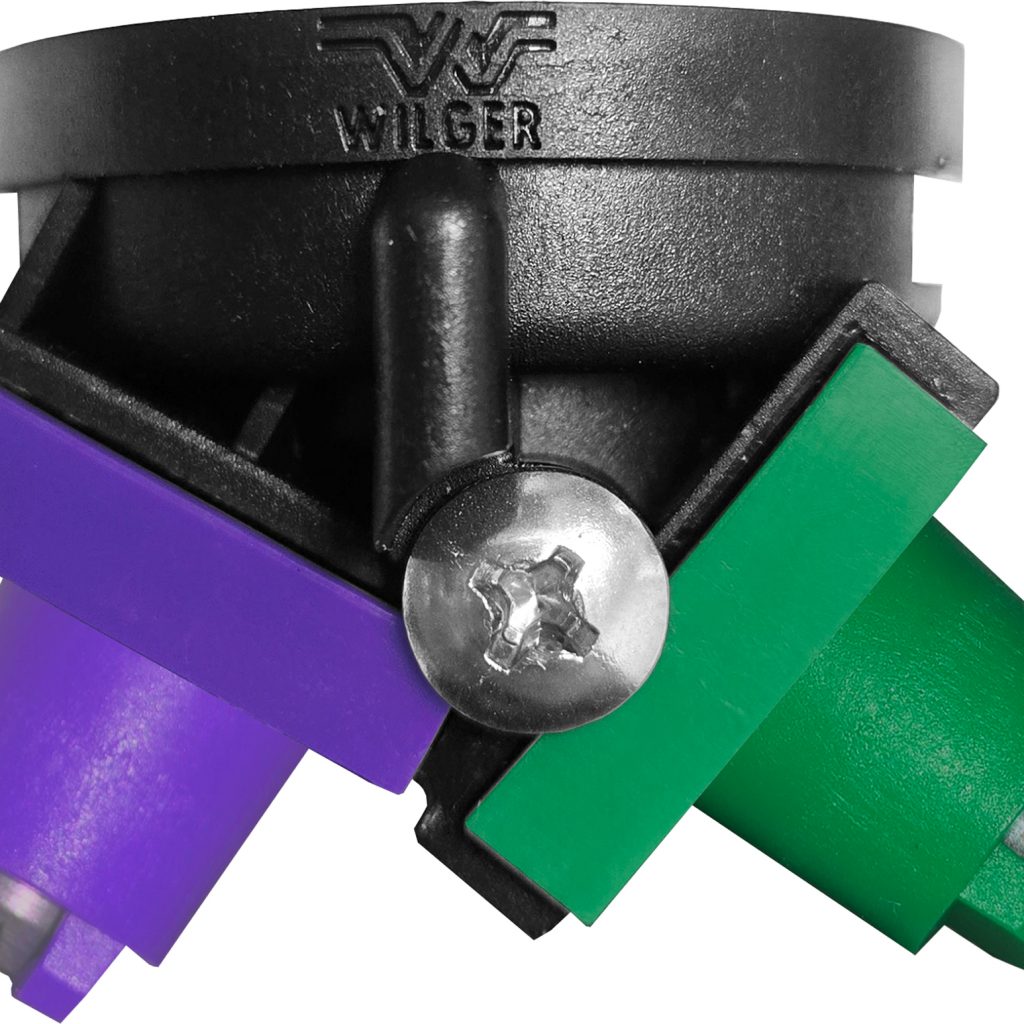
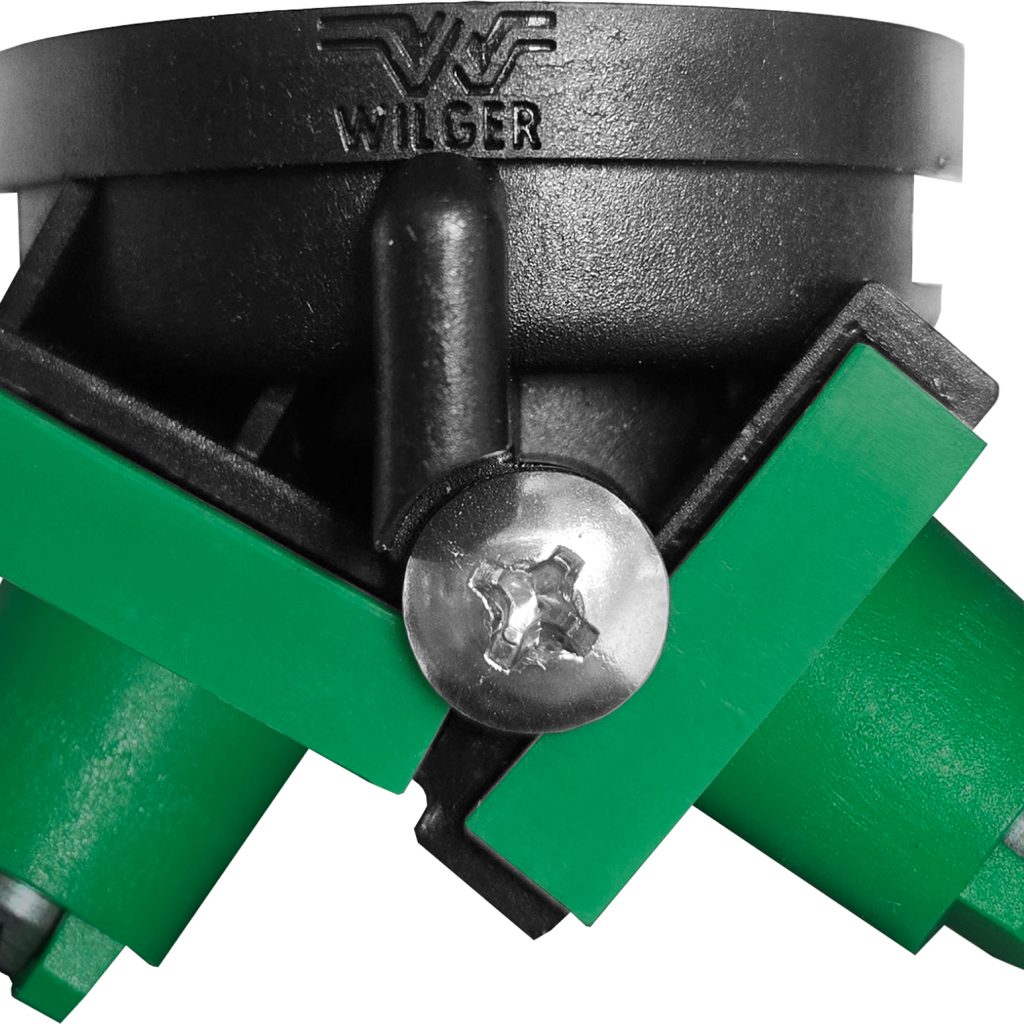
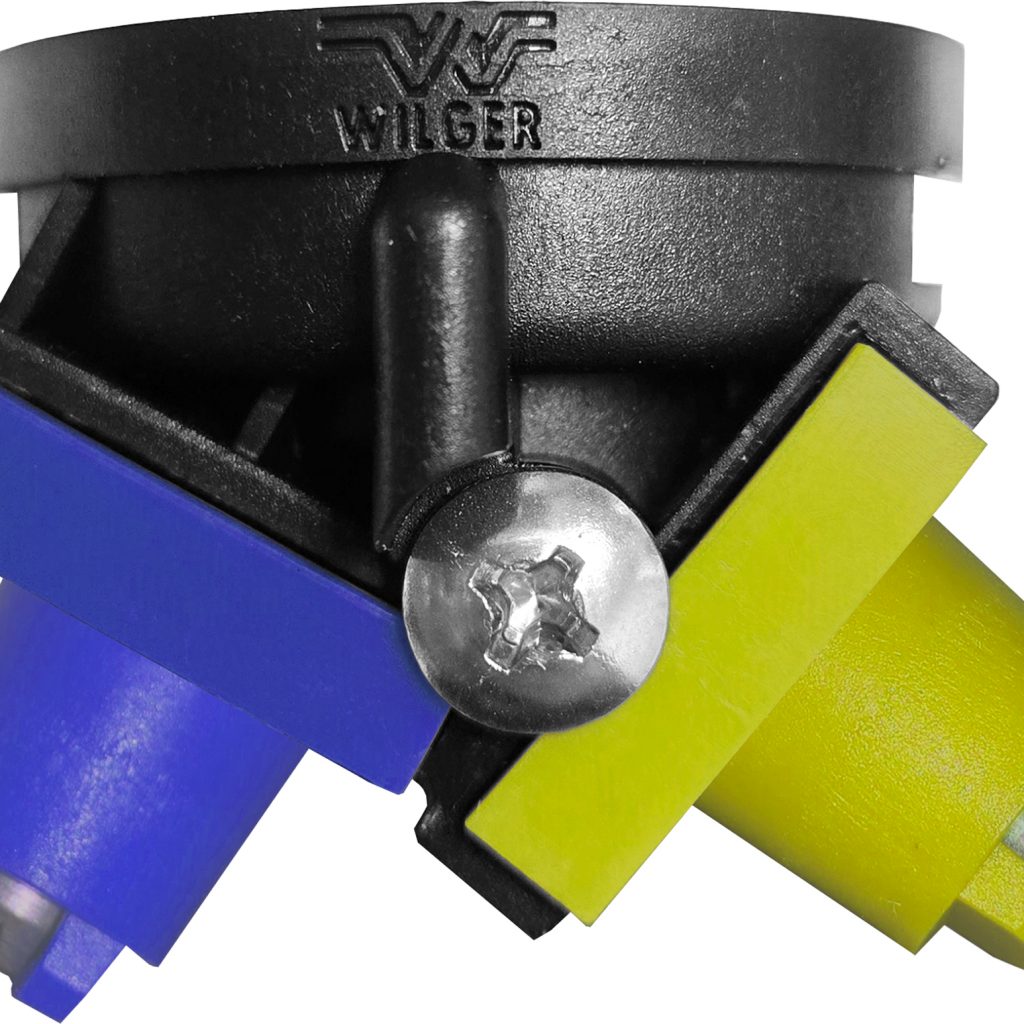
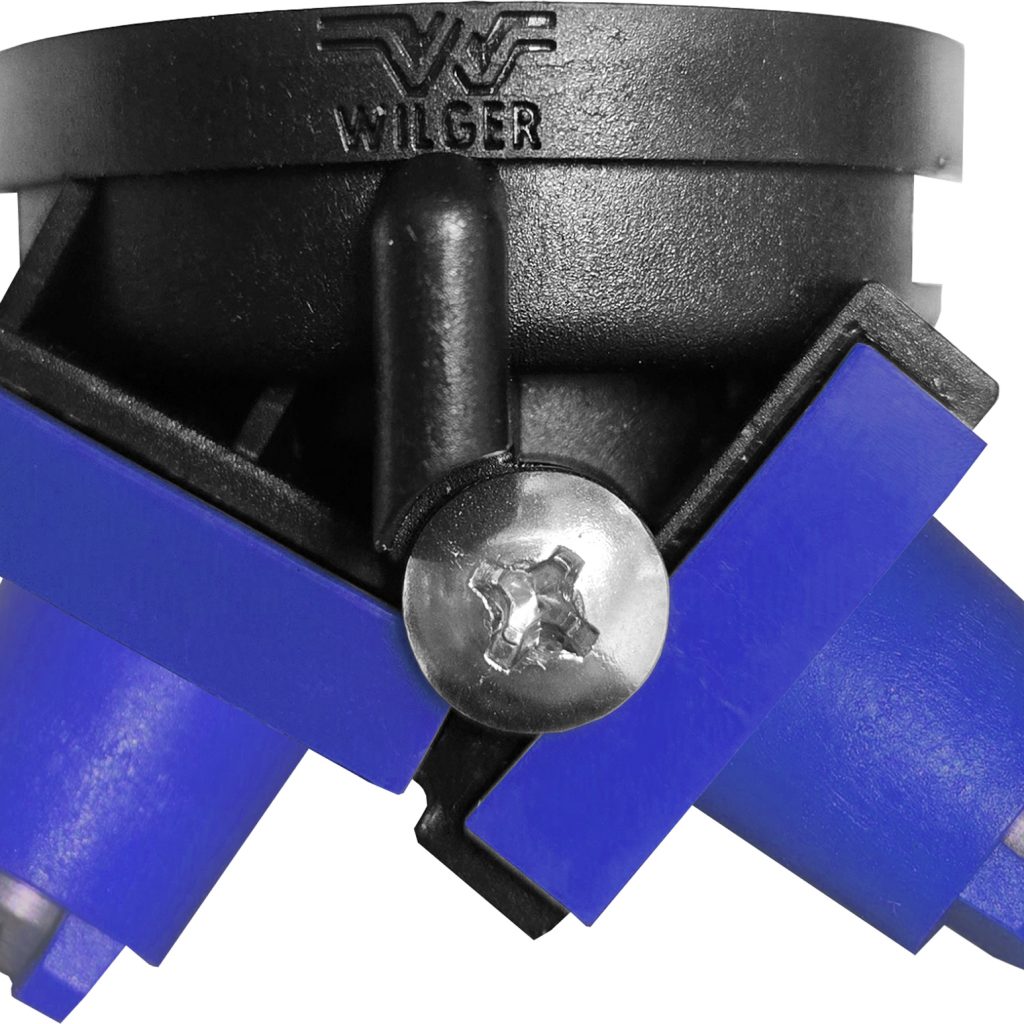
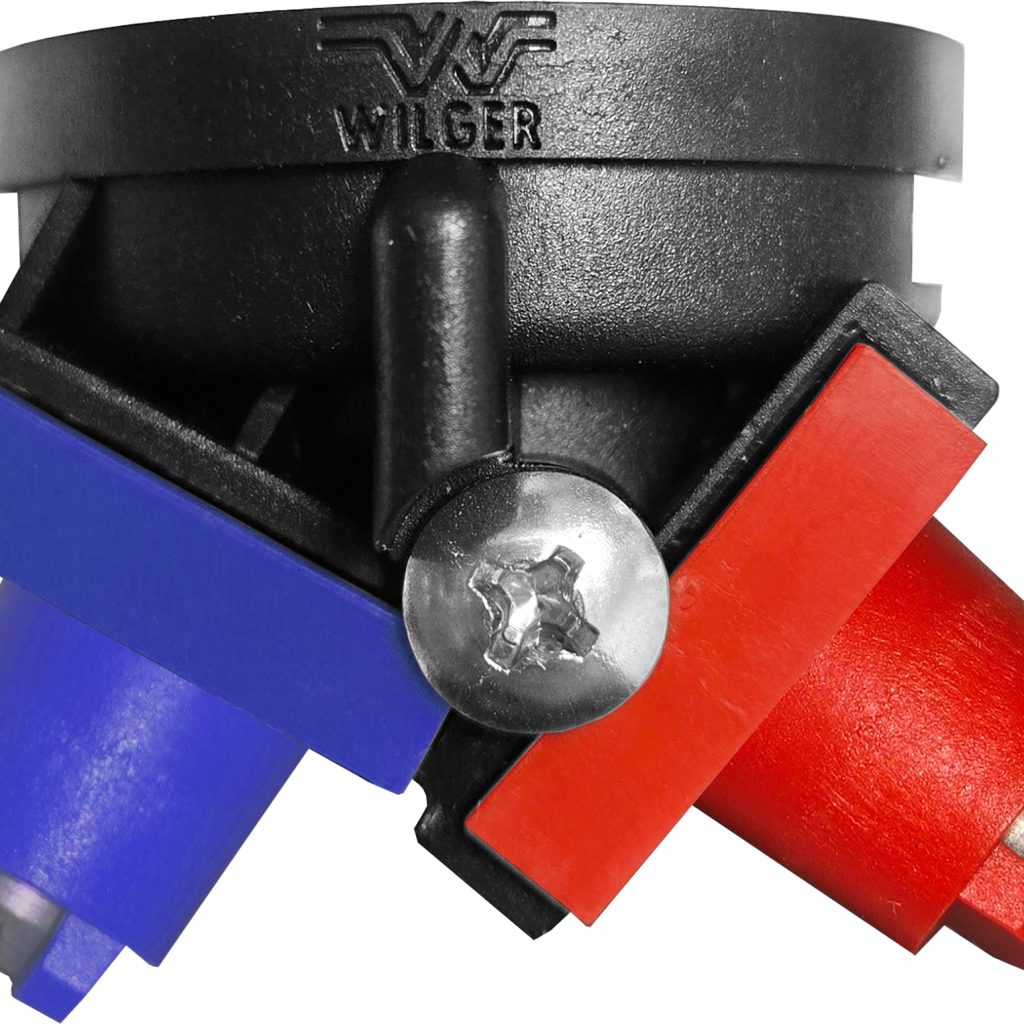
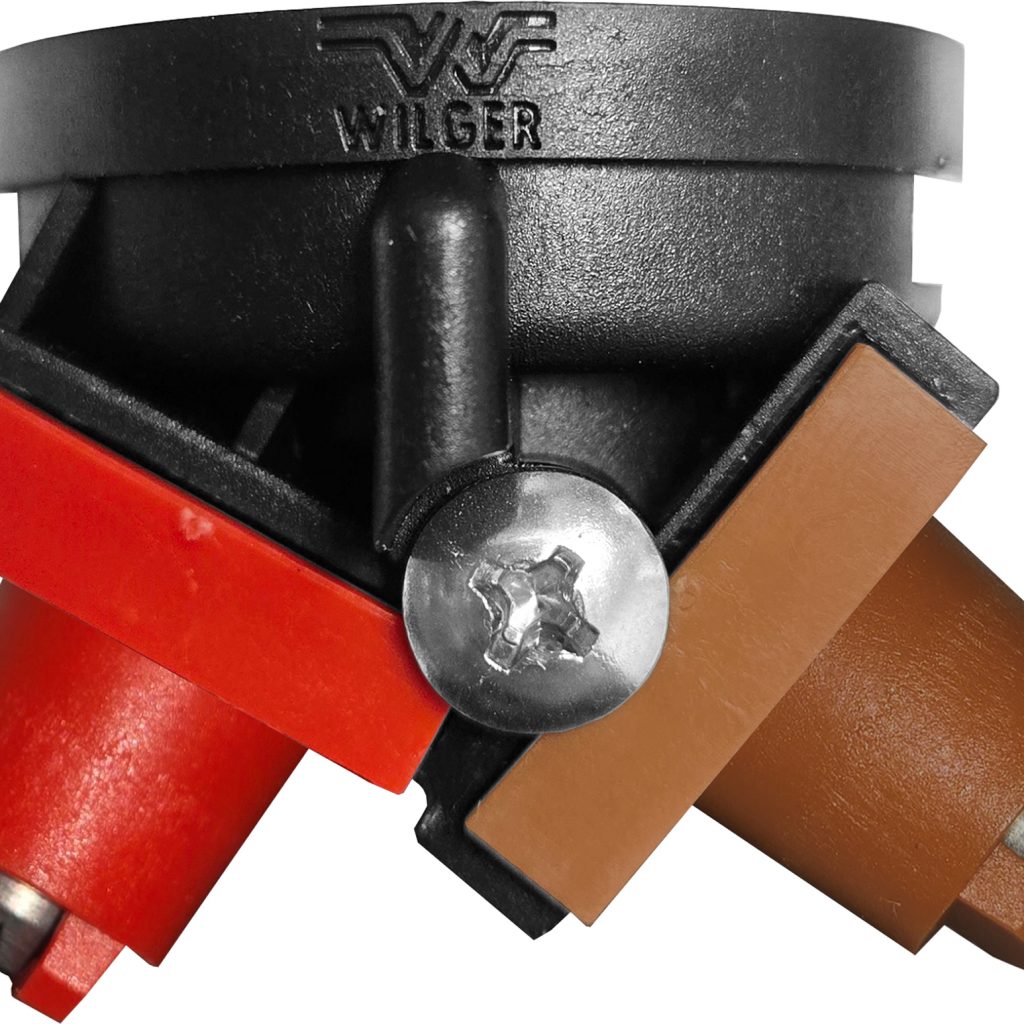
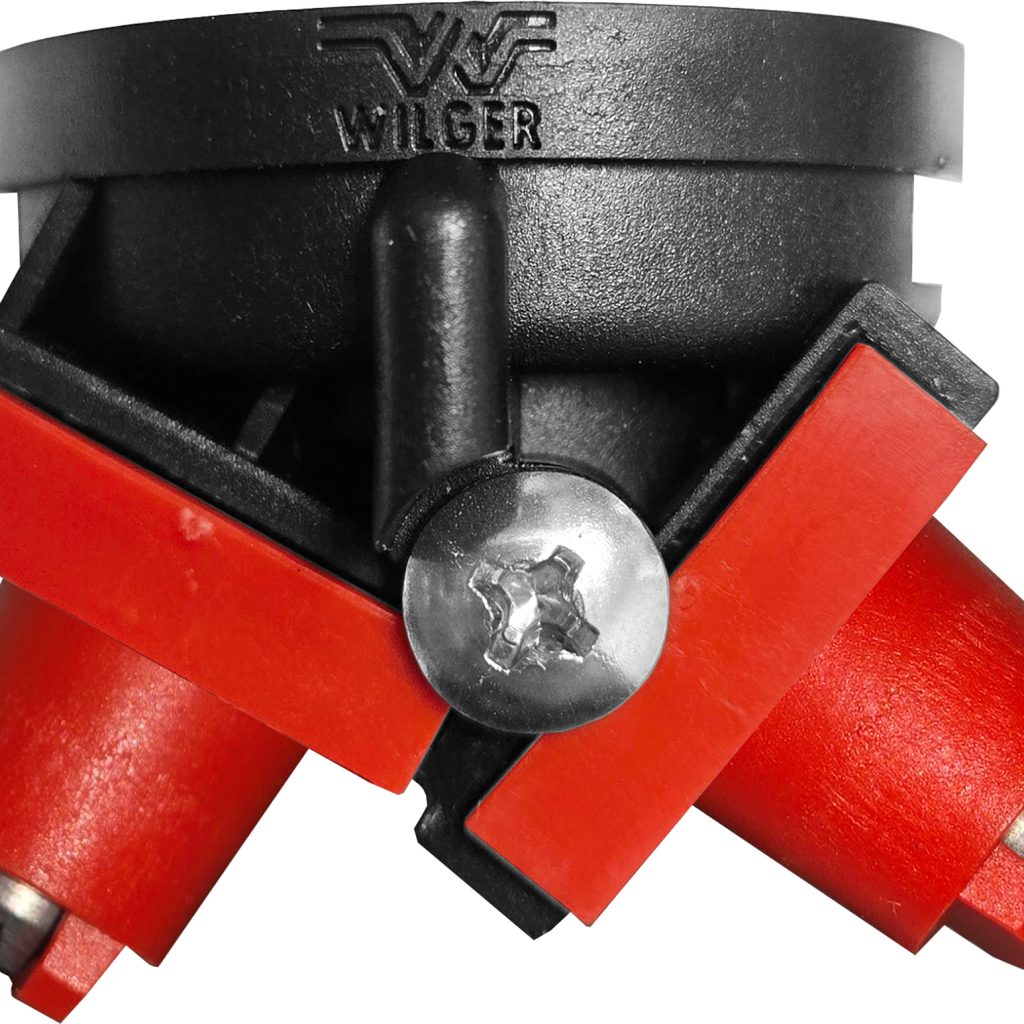
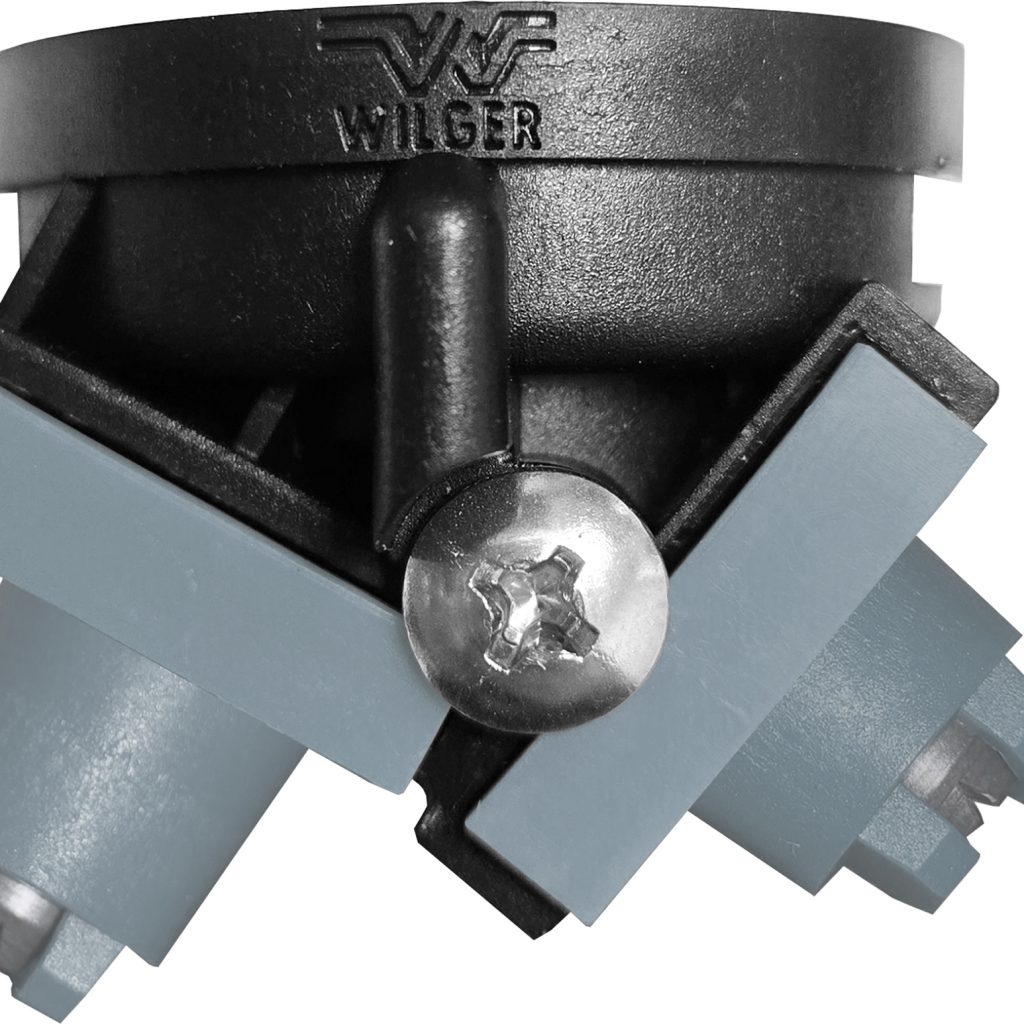
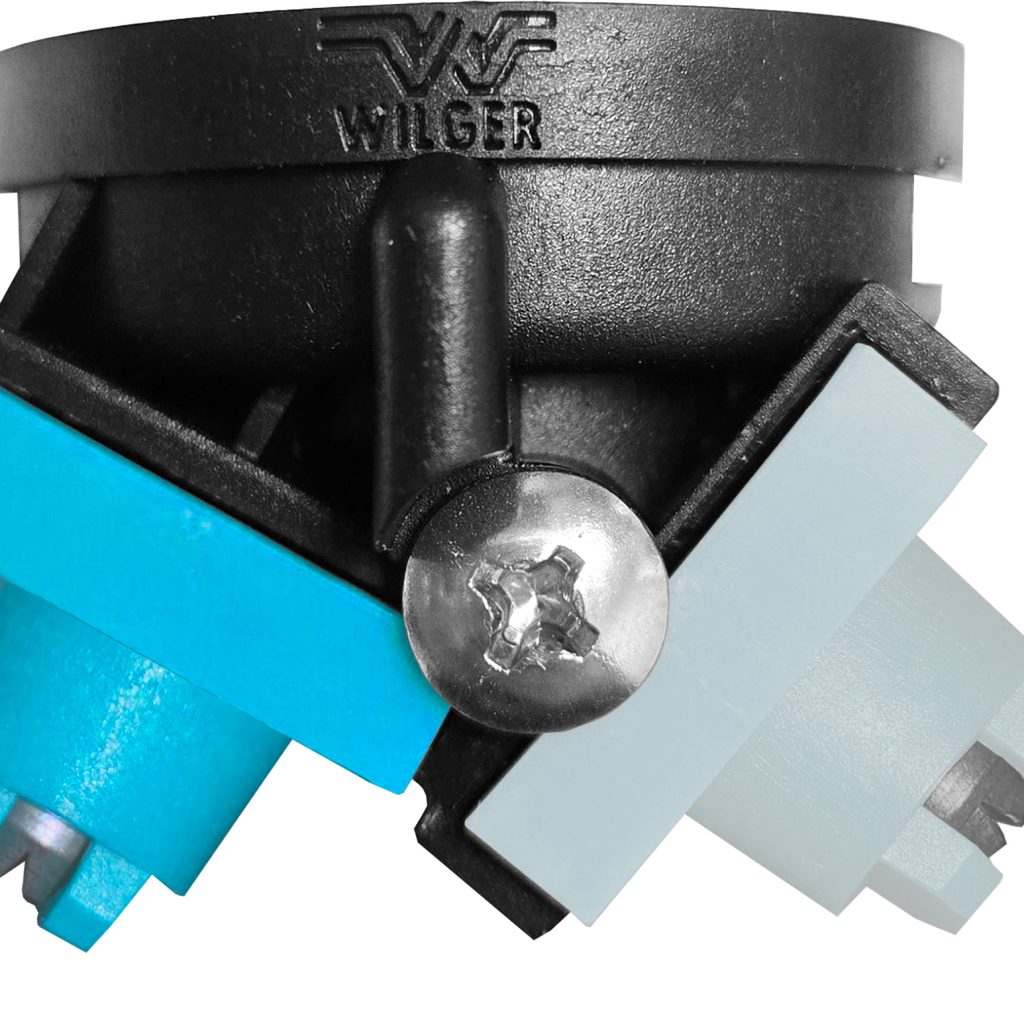
What happens when I switch the ‘forward’ and ‘backward’ spray direction of the nozzles?
Effectively, using cereal headblight as an example, with fungicide coverage being needed on the both the front and the back of the head:
- The 50° angle spraying forward provides the highest level of front (and incremental back) of cereal head coverage.
- The 50° angle spraying backward provides a medium-high level of back of cereal head coverage, but due to the challenges of sprayer speed, turbulence off the sprayer boom and such, it would provide less overall % of spray volume hitting the target.
- The 30° angle spraying forward provides a medium-high level of coverage to the front of the head, and the 50° angle backwards provides an equal medium-high level of coverage. This is the rationale to the ‘main’ configuration of the nozzle being used as a 30° forward/50° back, such that it may not be the most effective and efficient volume of spray being deposited of the application rate, but it equalizes the spray volume on the front and back of the cereal head.
So, can you use the 50° angle forward, absolutely. Can you use the 30° angle forward, absolutely. Can you alternate the spray pattern directions, absolutely. The key to choosing which would be understanding what target you want to hit, and emphasizing it with the angles that are available to you.